
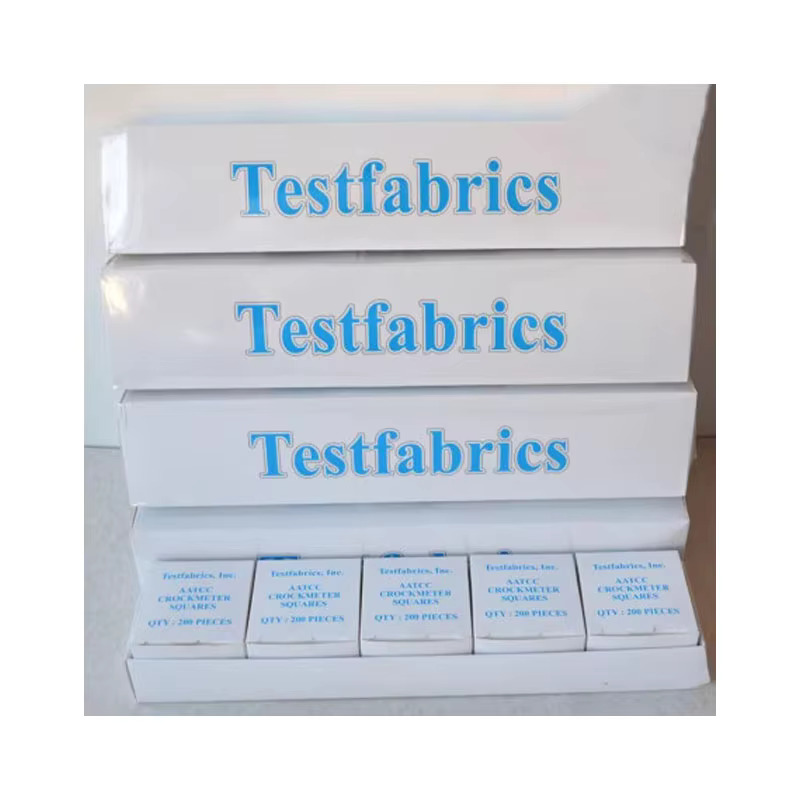
Description
Key details:
- Colorfastness Testing: Used primarily in “crocking” tests to determine how much dye rubs off a material when it is dry or wet.
- Dry Crocking: A dry square of the cloth is rubbed against a colored specimen for a set number of cycles.
- Wet Crocking: The cloth is pre-moistened with distilled water (usually to 65% moisture content for AATCC standards) before rubbing to simulate conditions like perspiration or rain.
- Versatile Testing: While mainly for garments and fabrics, it is also used for testing carpets, printing inks, laminates, and painted surfaces.
Technical Specifications
To maintain precision, the cloth must adhere to strict manufacturing profiles: []
- Composition: 100% combed cotton, desized and bleached with no optical brighteners or finishes.
- Structure: Typically a 1/1 plain weave with specific thread counts (approx. 32–33 ends/picks per cm) to ensure uniform surface friction.
- Standard Formats:
- Pre-cut Squares: Most commonly available in 2×2 inch (50×50 mm) squares, often sold in boxes of 1,000 pieces.
- Full Width: Also available in rolls, typically 54 inches wide.
- Compliance: Meets requirements for AATCC Test Method 8 and AATCC 165.
Reviews
There are no reviews yet.